
I got my first chicken at the Butler Fair when I was three years old. That’s not a figure of speech; my parents have the photo. Twenty-eight years later I’m running Silkies and ISA Browns at Stella Manor, and I’ve been through just about every coop configuration you can imagine: coops I built from scratch, pre-built kits I assembled in an afternoon, barns I converted, chicken tractors I’ve dragged across pasture.
I recently contributed to a guide on this exact question, you can read it here, but I wanted to give you the version with more of my own history behind it.
The coop I bought in 2017 is still running fine
Back in May of 2017 I bought a manufactured coop. Nothing fancy, a pre-built kit. I had it together in a few hours. Nine years later it’s required almost no maintenance and it’s still one of the easiest coops in my rotation to clean and collect eggs from. I tell people that because there’s a lot of snobbery in the backyard chicken world about pre-built coops, the assumption being that they’re cheap and fall apart. That hasn’t been my experience.

If you’re getting started, or you just need capacity fast, a good pre-built is a fine option. The word “good” is doing a lot of work in that sentence. Cheap coops with thin wood and flimsy latches are genuinely dangerous; predators are patient and hardware cloth matters more than aesthetics.
When building makes sense
I’ve also built coops from scratch, and there are situations where that’s clearly the right move. Integrating a coop into an existing barn or outbuilding is almost always better done from scratch because you can size it exactly and wire it how you want instead of shoving a kit into a space it wasn’t designed for. I’ve converted sections of outbuildings at Stella Manor into coop space and that’s some of the most functional housing I run.
Building also makes sense when your breed has specific requirements. Silkies don’t do well in a lot of standard pre-builts. Lower roosts, different box dimensions, more floor space per bird. When you build, you design for the bird you actually have.
What I run now
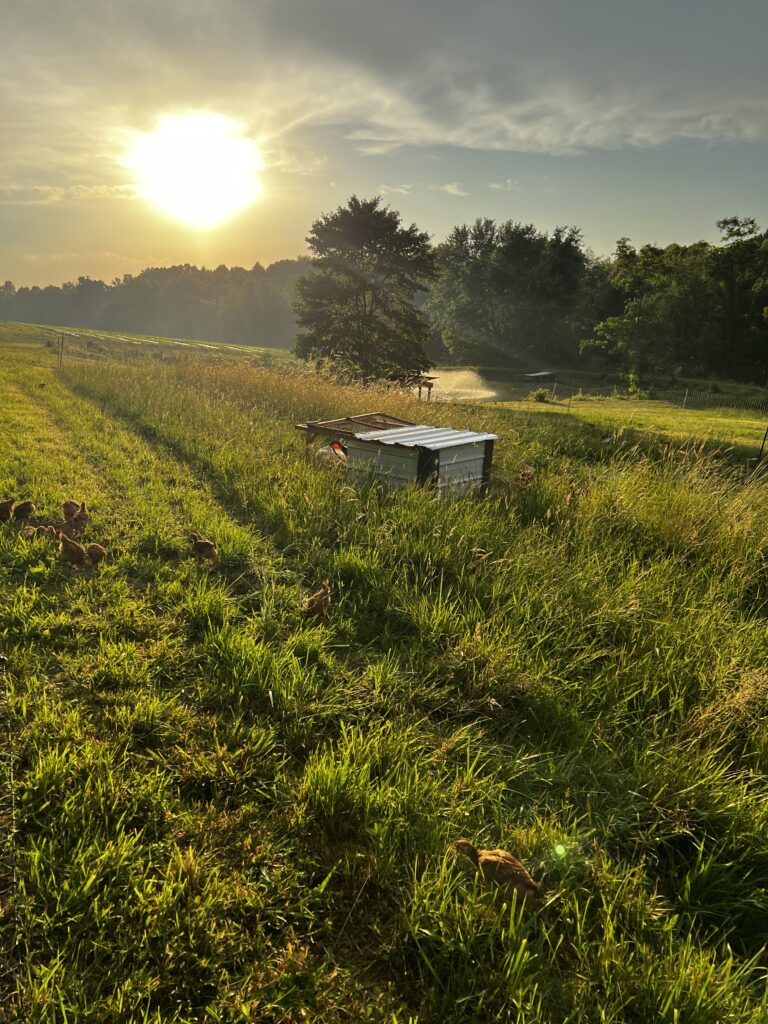
At Stella Manor I run a mix. Static coops, both built and bought, for my breeding groups. Chicken tractors for the pastured birds. The tractor setup is where I see the most value from a farm systems standpoint: the birds rotate across pasture, scratch and fertilize, and the land gets time to recover. That’s a whole separate topic, but if you’re farming with any regenerative intent at all, chicken tractors are worth understanding. I’ve written more about it over on Regenerative Seed.
What I’d actually tell someone starting out
Buy something decent, learn your birds, then build something more permanent once you know what you actually need. Your second coop will be better than your first because by then you’ll know things you couldn’t have known in advance, how your birds move, where they roost, how you actually want to access the space.

If you’re expanding an existing flock, think hard before defaulting to another static structure. A chicken tractor might serve you better depending on your land and bird count.
The guide I contributed to covers the cost comparison in more detail and has a good rundown of what to look for in pre-built options — worth reading if you’re actively in the decision.
Cody Deluisio raises Silkies and ISA Browns at Stella Manor in Bell Township, Pennsylvania. He is a member of the American Bantam Association and has been keeping chickens for over 28 years.
